Artemis II is now in outbound transit to the Moon! Follow the live trajectory below.
OUTBOUND TRANSIT— Day 5
The crew is coasting through deep space, 221.7K miles from Earth and 51.8K miles from the Moon. Lunar flyby in approximately 15h 7m.
Orion enters the lunar flyby corridor
WISEMAN · GLOVER · KOCH · HANSEN
FOLLOW THE TRAJECTORY
Scroll to fly the Orion spacecraft from Earth to the Moon and back. The green pulsing marker shows where they are right now.
Liftoff from Kennedy Space Center
The SLS rocket generates 8.8 million pounds of thrust, lifting the 5.75 million pound vehicle off Pad 39B. In just 8.5 seconds, it clears the 380-foot launch tower.
All NASA content is in the public domain. Live feed auto-plays when NASA broadcasts.
FOUR PIONEERS
The most diverse deep-space crew in history. Each will set a record that can never be repeated.
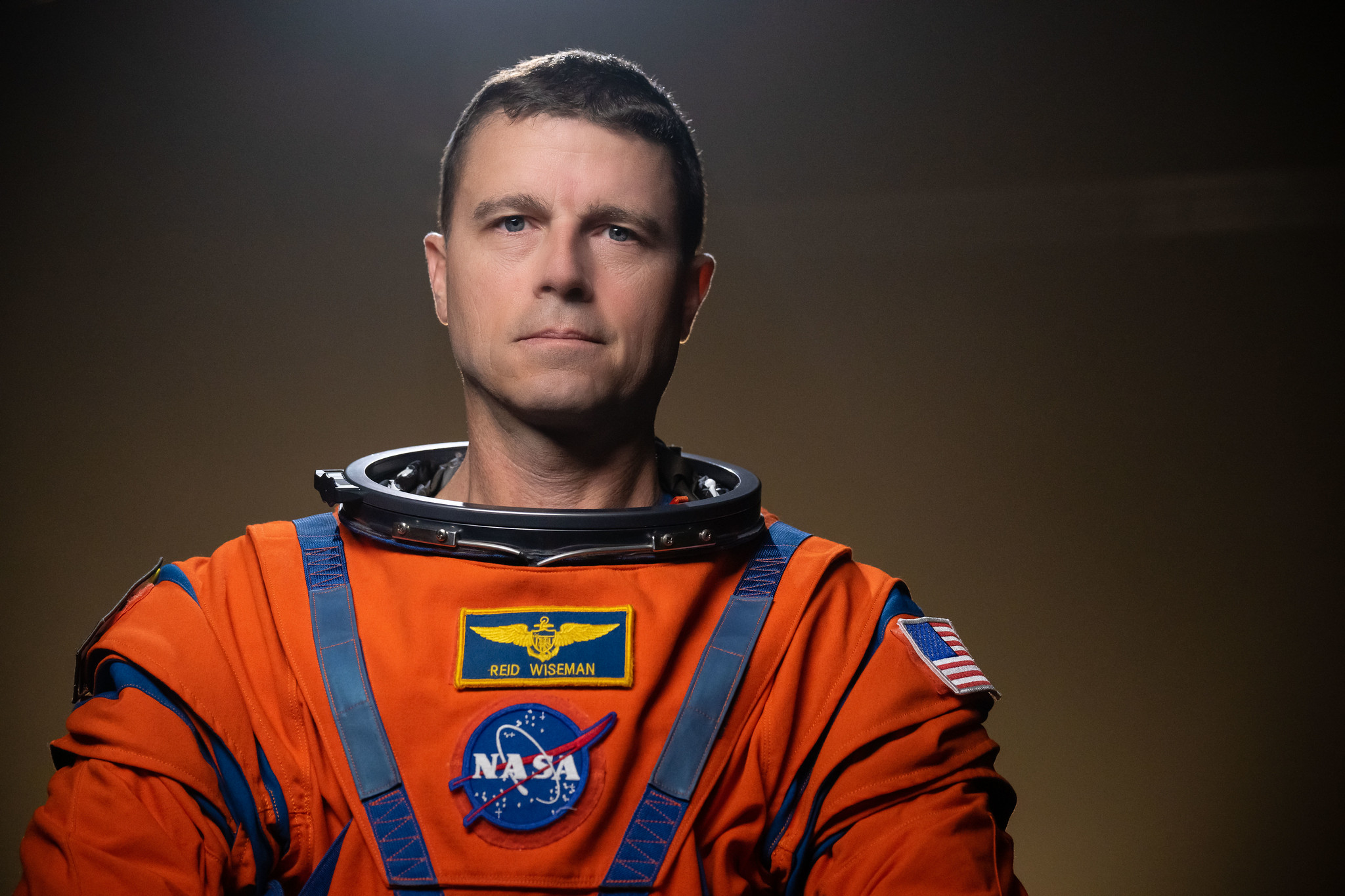
Reid Wiseman
Commander
NASA
Mission Commander
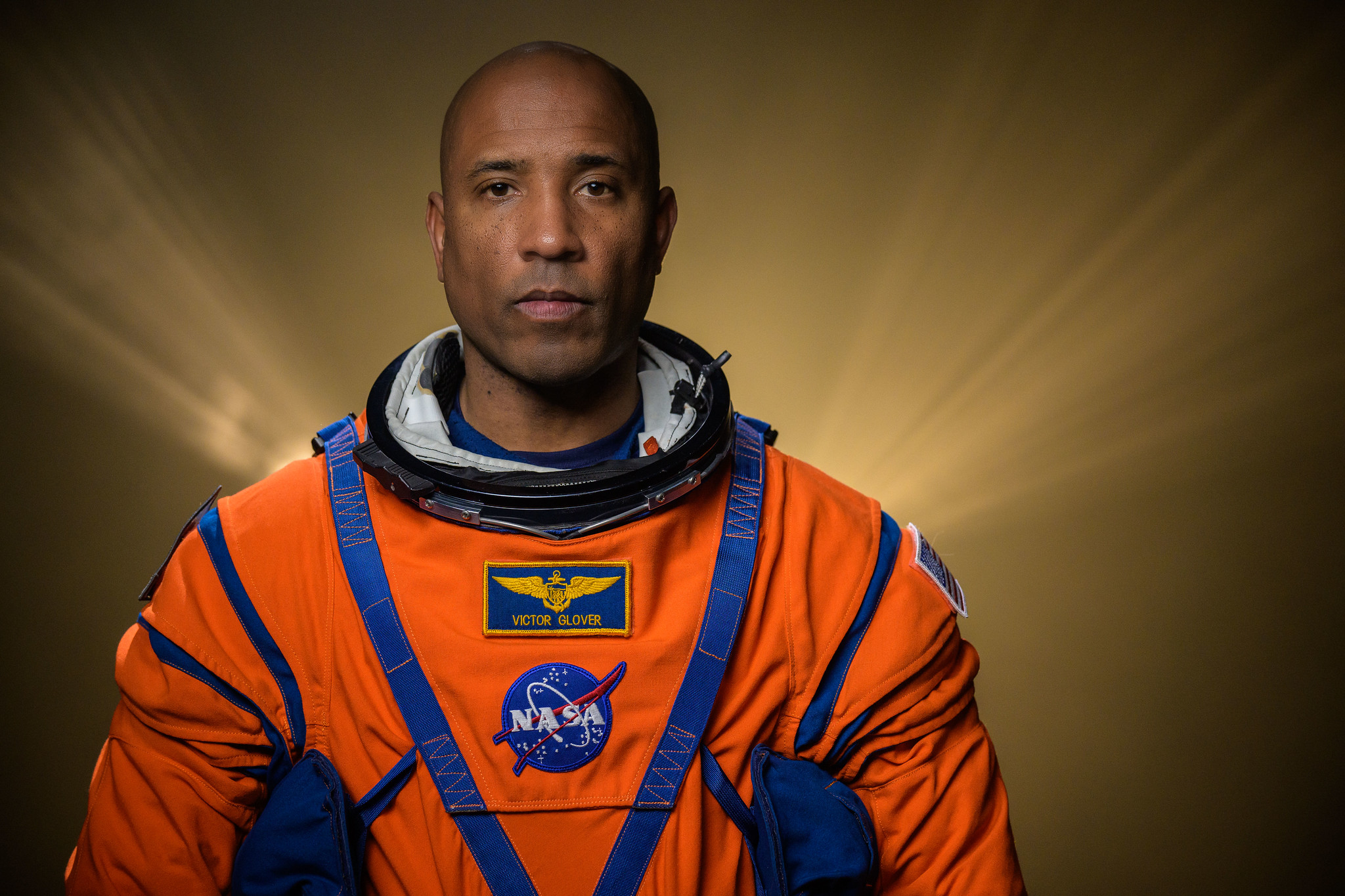
Victor Glover
Pilot
NASA
First person of color beyond LEO
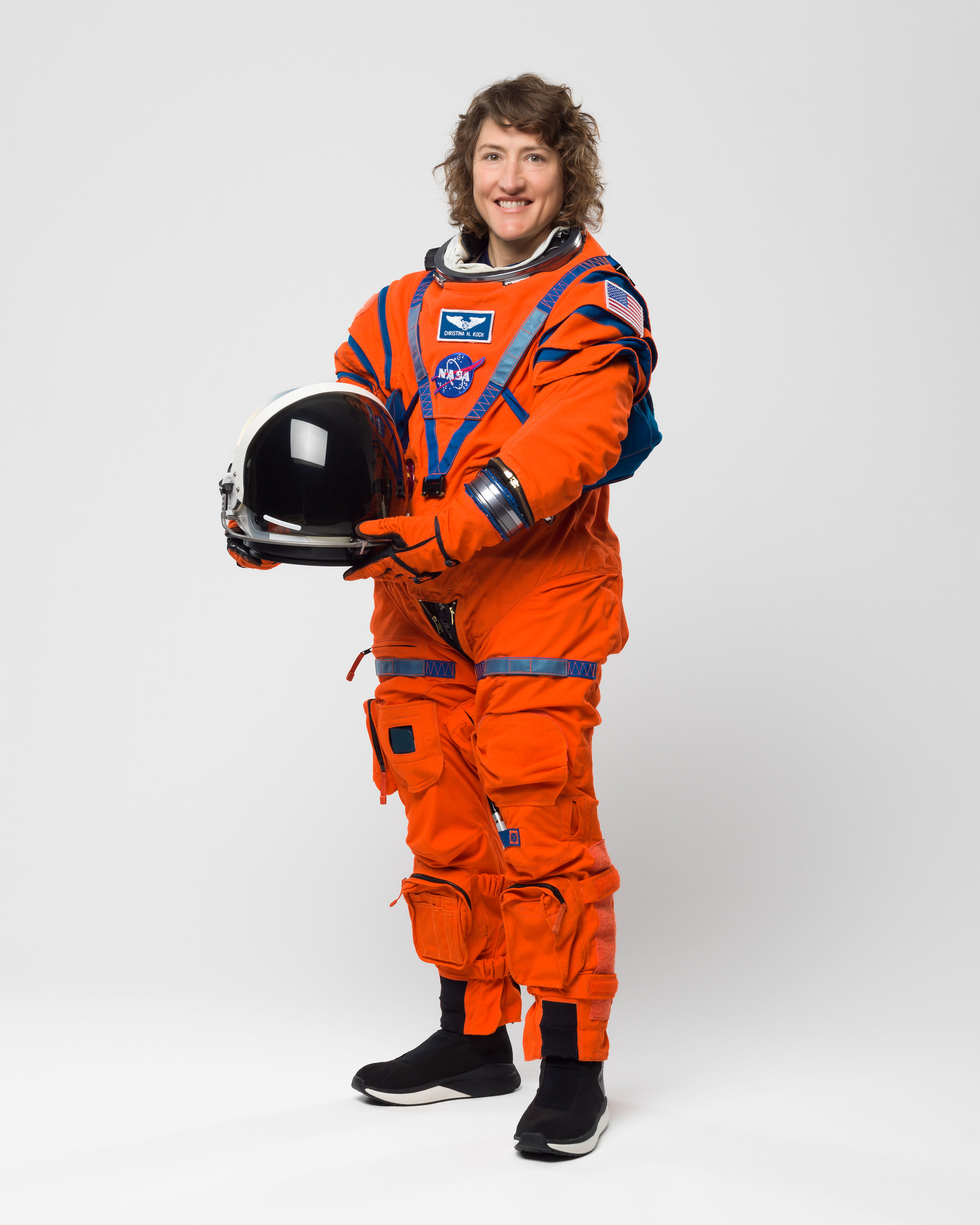
Christina Koch
Mission Specialist 1
NASA
First woman beyond LEO
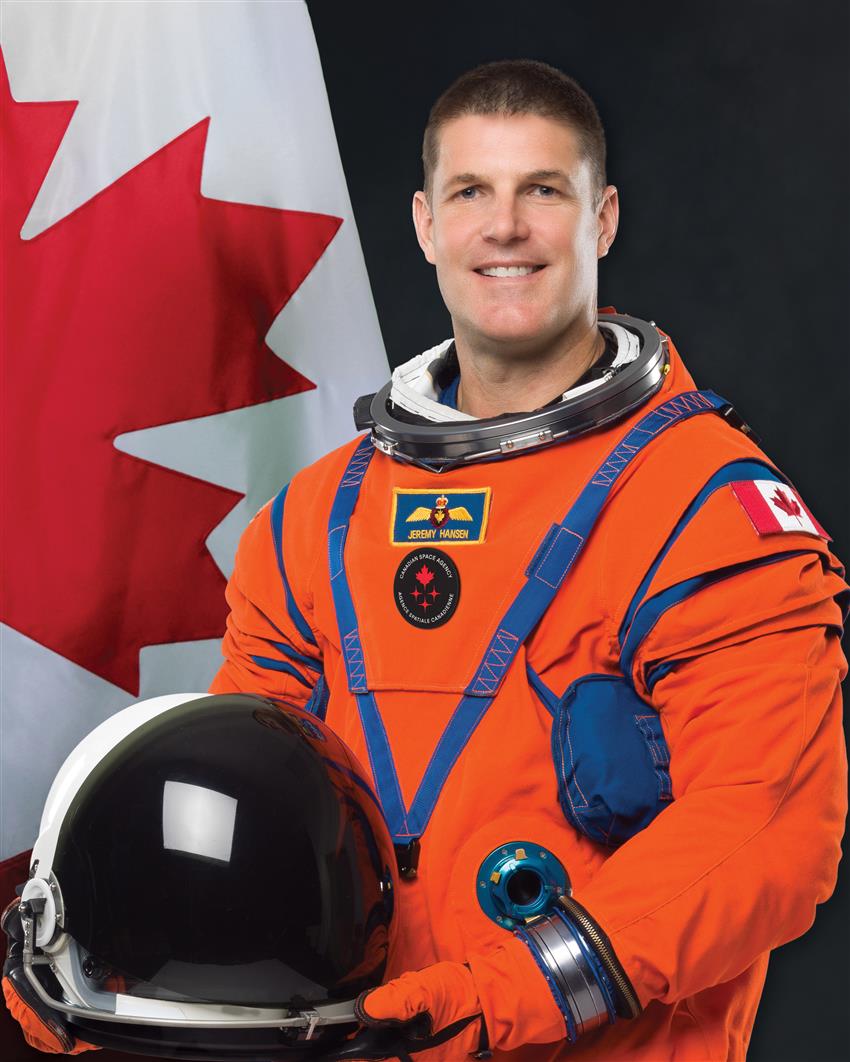
Jeremy Hansen
Mission Specialist 2
CSA
First non-US citizen beyond LEO
ON THE PAD
Kennedy Space Center, LC-39B
The Space Launch System (SLS) stands 322 feet tall on Launch Complex 39B — the same pad that launched Apollo missions to the Moon. Fully fueled with 733,000 gallons of liquid hydrogen and liquid oxygen, the rocket generates 8.8 million pounds of thrust at liftoff — 15% more than the Saturn V.
The SLS is the most powerful rocket ever built by NASA
Two 5-segment solid rocket boosters provide 75% of liftoff thrust
The core stage is powered by four RS-25 engines — upgraded Space Shuttle main engines
The Orion spacecraft sits atop with its Launch Abort System tower
IGNITION & LIFTOFF
T+0 seconds — All engines firing
At T-6.4 seconds, the four RS-25 engines ignite in a staggered sequence. At T-0, the twin solid rocket boosters fire and eight explosive bolts release the rocket. In 8.5 seconds, the SLS clears the 380-foot mobile launcher tower. The sound wave takes 15 seconds to reach spectators 3 miles away — a deep, chest-rattling roar.
RS-25 engines throttle to 109% of rated power at liftoff
The rocket consumes 1,500 gallons of fuel per second
Peak noise reaches 180 decibels at the pad — louder than a jet engine
The Sound Suppression System dumps 450,000 gallons of water to dampen acoustic energy
MAX-Q
T+80 seconds — Maximum dynamic pressure
About 80 seconds after launch, the rocket hits Max-Q — the point of maximum aerodynamic stress. The atmosphere is pushing hardest against the vehicle as it accelerates through the sound barrier. The RS-25 engines briefly throttle down to reduce stress, then throttle back up once through the danger zone. The crew feels about 2.5 Gs of force.
Max-Q occurs at roughly 35,000 feet altitude
The rocket passes through the sound barrier (Mach 1) at about 1 minute
Aerodynamic pressure peaks at approximately 700 pounds per square foot
Engine throttle-down protects the vehicle structure from excessive loads
BOOSTER SEPARATION
T+2 min 12 sec — SRBs jettisoned
At T+2 minutes 12 seconds, the twin solid rocket boosters have burned through 1.2 million pounds of propellant each. Explosive separation motors fire, pushing the 187-foot boosters away from the core stage at 20 feet per second. They tumble back toward the Atlantic Ocean from 150,000 feet. The core stage RS-25 engines continue burning.
Each SRB weighs 1.6 million pounds at ignition
Separation occurs at approximately 150,000 feet (28 miles)
The rocket is traveling at about 3,000 mph at separation
Unlike Space Shuttle SRBs, these are not recovered — they sink into the ocean
CORE STAGE SEPARATION
T+8 min 15 sec — MECO & stage jettison
After burning for 8 minutes, the RS-25 engines shut down — Main Engine Cutoff (MECO). The massive 212-foot core stage separates and falls back to Earth, breaking up in the atmosphere over the Pacific. The Interim Cryogenic Propulsion Stage (ICPS) and Orion continue upward.
The core stage consumed 2.2 million pounds of liquid hydrogen and oxygen
At MECO, the vehicle is traveling at approximately 17,000 mph
The core stage is the largest single rocket stage ever built
ICPS is powered by a single RL-10 engine — proven on over 500 flights
EARTH ORBIT
Altitude: ~115 miles — Systems checkout
Orion enters a high Earth orbit for up to 24 hours of systems checkout. The crew tests life support, navigation, communication, and manual flight controls. This is the first time humans have flown in Orion — every system must be verified before committing to the Moon.
The orbit reaches up to 43,000 miles from Earth at apogee
Crew performs proximity operations and manual piloting tests
All Orion systems are verified: life support, thermal, power, navigation
This checkout phase was not part of Apollo — unique to Artemis
TRANS-LUNAR INJECTION
The burn that sends humans to the Moon
This is the moment. The ICPS RL-10 engine fires for approximately 18 minutes, accelerating Orion from 17,500 mph to 24,500 mph — escape velocity. This single burn commits the crew to a lunar trajectory. After the burn, the ICPS separates and Orion is on its own.
The TLI burn increases speed by approximately 7,000 mph
This is the same maneuver Apollo missions used — but with modern precision
After ICPS separation, Orion's European Service Module handles all propulsion
The free-return trajectory is a safety feature: gravity alone returns the crew to Earth
OUTBOUND COAST
4 days crossing 240,000 miles of deep space
For four days, Orion coasts through the void between Earth and Moon. The crew experiences something only 24 humans have ever seen: Earth shrinking to the size of a marble while the Moon grows from a dot to a world. They are farther from home than any human has ever been.
The crew will see Earth as a complete sphere — the "Overview Effect"
Radiation exposure increases significantly outside Earth's magnetosphere
The crew performs mid-course correction burns using the Service Module engine
At the midpoint, approximately 120,000 miles from both Earth and Moon
LUNAR FLYBY
Closest approach: ~4,000 miles from the far side
The most dramatic moment of the mission. Orion swings behind the Moon at approximately 4,000 miles above the far side — the hemisphere never visible from Earth. For 20 minutes, the crew loses all communication with Earth as the Moon blocks radio signals. They are the most isolated humans in history.
The far side of the Moon has never been seen by human eyes in person
Loss of Signal (LOS) lasts approximately 20 minutes behind the Moon
The Moon's gravity accelerates Orion and bends its trajectory homeward
The crew will photograph potential Artemis III landing sites on the near side
RETURN TRANSIT
Homeward bound — 4 days back to Earth
After the lunar flyby, Earth's gravity steadily accelerates Orion homeward. The crew watches the Moon shrink behind them as Earth grows from a blue marble back to a world. Speed increases from 3,000 mph to over 25,000 mph as Earth's gravity pulls them in.
The free-return trajectory requires no major engine burns to come home
Earth's gravity accelerates the spacecraft continuously during return
The crew jettisons the Service Module shortly before re-entry
Final approach speed will reach approximately 25,000 mph — 32 times the speed of sound
RE-ENTRY
25,000 mph into Earth's atmosphere
The capsule hits the atmosphere at Mach 32, creating a plasma sheath reaching 5,000°F on the heat shield. Orion follows a steeper direct entry profile — the skip re-entry was eliminated due to heat shield concerns. The crew experiences approximately 4G during peak deceleration.
Re-entry speed: approximately 24,500 mph (Mach 32)
Heat shield temperature reaches 5,000°F (2,760°C)
Steeper direct entry profile replaces skip re-entry (eliminated Jan 2026)
Radio blackout during plasma phase lasts several minutes
SPLASHDOWN
Pacific Ocean, off San Diego
Three massive parachutes — each 116 feet wide — slow the capsule from 300 mph to 20 mph. Orion splashes down in the Pacific Ocean. The crew has traveled over 1.2 million miles and set records that can never be repeated.
Three main parachutes, each 116 feet in diameter
Splashdown speed: approximately 20 mph
USS Portland (LPD-27) leads the recovery fleet
The crew has set records that can never be repeated
APOLLO 13 DISTANCE RECORD
26,998 mi remaining
Apollo 13 set the record of 248,655 mi on April 14, 1970 — Artemis II will break it
SIGNAL DELAY
Speed-of-light communication lag
EARTH
ORION
MILESTONES ACHIEVED
5 of 7 historic firsts
First woman beyond low Earth orbit
Christina Koch
First Black astronaut beyond low Earth orbit
Victor Glover
First Canadian in deep space
Jeremy Hansen
Successful SLS launch #2
Space Launch System
First crewed mission beyond LEO since 1972
Since Apollo 17 — 54 years ago
Apollo 13 distance record broken
400,171 km — approaching
Farthest humans from Earth ever
Will break during lunar flyby
DID YOU KNOW?
Fun facts updated in real time
At this distance, a text message to Earth takes 1.19s to arrive — and another 1.19s for the reply
CREW QUOTES
Words from the mission
We are going. Not just to visit, but to stay. This is just the beginning.
Reid Wiseman
Commander — Pre-launch press conference
SHARE THE MISSION
Generate a shareable card with live mission data
WHERE IS ORION RIGHT NOW?
Coasting toward the Moon on free-return trajectory. Crew monitors systems and gathers deep space data
FOLLOW THE MISSION
Get notified when mission milestones are reached, new videos drop, and when we launch the tracker for Artemis III. No spam — only mission-critical updates.